Scientists created a prototype device to bypass damaged olfactory nerves by transforming odors into tactile sensations. This technology allows the brain to perceive smells even when it can't detect them anymore.
Why it matters
Anosmia affects millions, stripping away flavor, emotional depth, and vital safety warnings like gas leaks or smoke. This device shifts medical focus from repairing fragile neural pathways to sensory substitution. The solution is not fixing the nose: it is rerouting the signal.
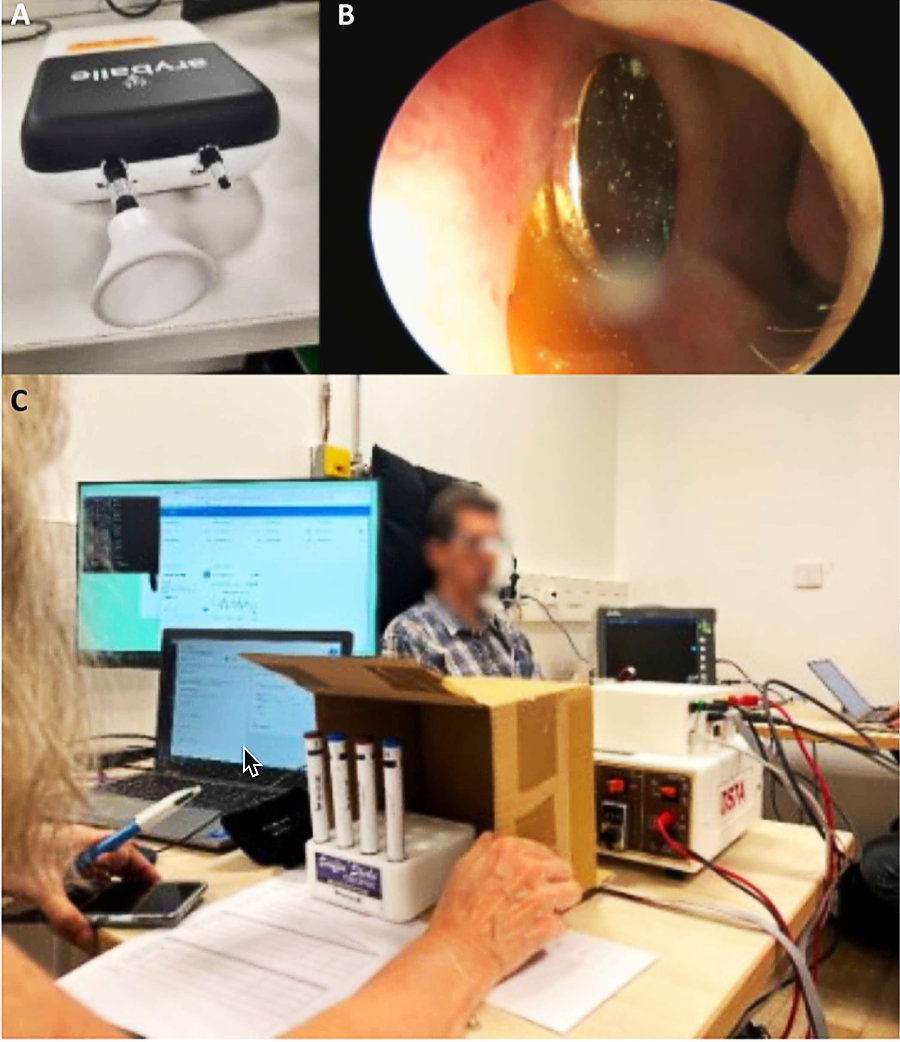 The experimental device combines the artificial nose and the stimulator. The device consists of a VOC detector (A) coupled to the clip-style stimulator (B) via a custom interface (C).
Photo credit: Halina B. Stanley et al. Substitution of human olfaction by the trigeminal system.Sci. Adv.11,eadu7926(2025).DOI:10.1126/sciadv.adu7926
How it works
The system separates detection from perception through a two-step process:
-
Digital capture: Artificial sensors detect airborne molecules and create a digital signature.
-
Neural rerouting: The system targets the trigeminal nerve to bypass damaged circuitry.
-
Tactile translation: It delivers somatosensory signals to the nasal cavity to trigger touch sensations.
-
Brain training: Users map touch patterns to odors to build a new interpretive map.
The intrigue
The nasal cavity houses two sensory systems: the olfactory network and the trigeminal system. Researchers leveraged the trigeminal pathway to carry complex chemical data, creating a functional bypass for the brain.
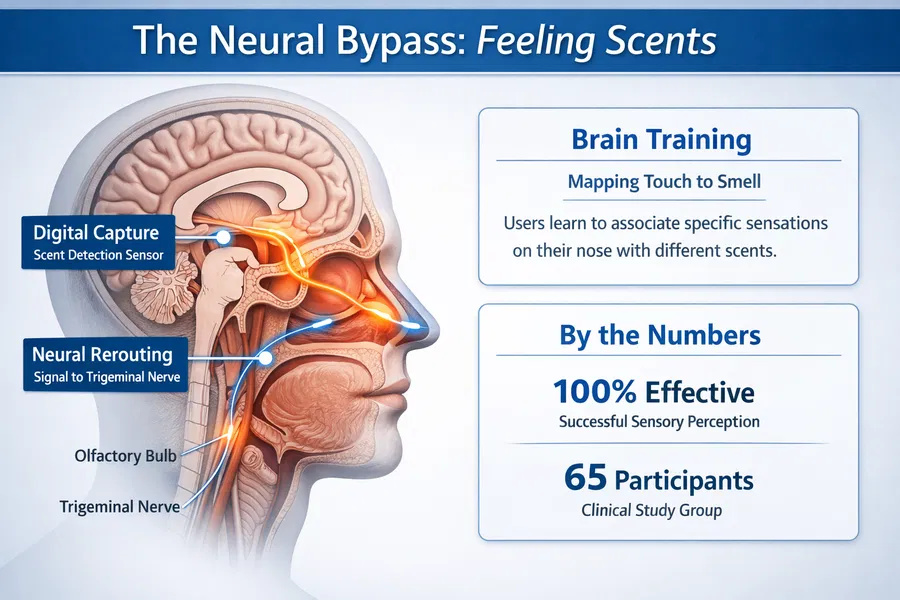
By the numbers:
-
65: The number of participants.
-
100%: The system worked equally well for people with total smell loss and those with normal olfaction.
-
3 causes of smell loss: Viral infections, head trauma, and neurological diseases.
Yes, but:
The device is a proof of concept.
-
No "bloom": It doesn't restore the sensory richness or immediate pleasure of a scent.
-
Learning curve: Users must train their brains to recognize the new tactile signals.
The bottom line
We can’t always repair the neural wiring for smell, but we can teach the brain to read the chemical world through a different language.