Forty UK experts urged the UK government to overhaul its dementia prevention approach. Their roadmap is crucial for global health, including the US. The Nottingham Consensus delivered 56 policy recommendations to translate research into policy, offering a blueprint for addressing a growing worldwide challenge.
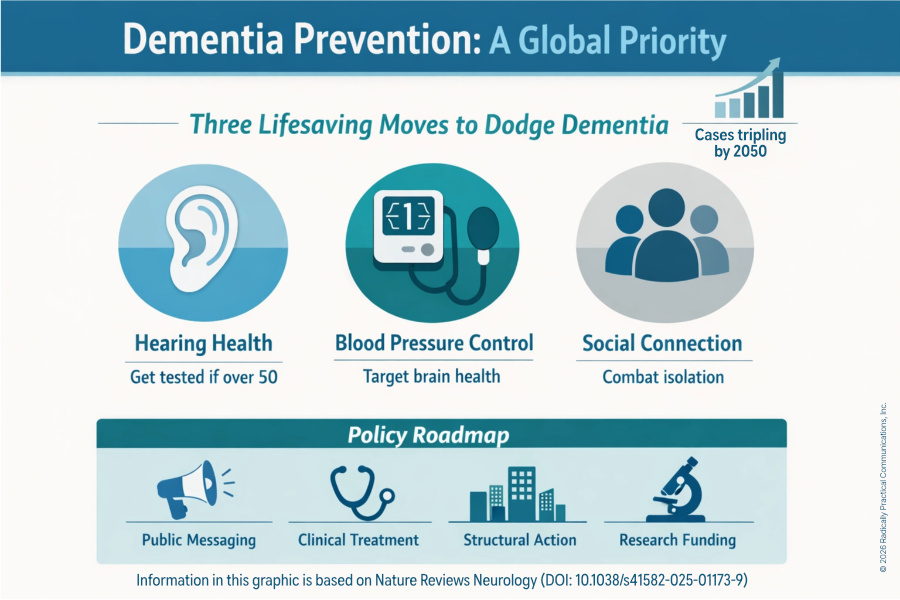
Dementia is the leading cause of death in the UK. Cases will triple by 2050.
Why it matters
Public awareness of dementia risk reduction remains low despite decades of evidence. Without a coordinated government strategy, millions face avoidable cognitive decline.
By the numbers:
-
56 total recommendations
-
4 policy areas covered
-
3x projected increase in dementia cases by 2050
-
40 experts on the panel
Zoom in
The panel identified evidence of effectiveness for individual action:
-
Hearing loss
-
Social isolation
-
High blood pressure
What this means for you:
-
Get your hearing tested if you're over 50.
-
Ask your physicians about blood pressure targets for brain health.
-
Recognize social isolation as a clinical risk, not just loneliness.
The big picture
The recommendations span four policy domains:
-
Reform public messaging with clear, actionable guidance instead of stigmatizing warnings.
-
Identify and treat individual risk factors clinically
-
Address structural factors outside individual control—socioeconomic deprivation, air pollution.
-
Fund research to fill knowledge gaps
Reality check
Without NHS-funded hearing services, community centers, and routine BP monitoring, interventions fail to reach high-risk populations.
-
The mistake: Treating dementia prevention as a personal responsibility checklist.
-
The fix: Building prevention into healthcare systems and urban planning.
What to know
The consensus calls for integrating dementia prevention into existing government programs on smoking, alcohol, pollution, and social inequality.
Example: Integrate dementia prevention into existing smoking cessation programs and air quality regulations—not standalone campaigns.
"People need clear, evidence-based guidance on protecting their brain health, but the information they receive can be confusing or make them feel blamed. What we need now is coordinated, structural action." —Lead author Dr. Harriet Demnitz-King
Key insight: The panel's modified Delphi process—gathering 40 diverse experts—signals that this isn't just one research team's opinion. It's consensus.
The bottom line
The panel reviewed research on hearing interventions, cardiovascular management, and social programs.
The evidence is clear. The UK lacks a coherent governmental strategy that treats dementia prevention as a public health priority, rather than an individual responsibility. Health inequalities mean not everyone has equal access to brain health in old age, but personal choices interact with social, economic, and environmental conditions across a lifetime.
Protect your hearing, lower your risk of dementia
Age-related hearing loss doesn't mean losing your social world or increasing your risk of dementia. Our free 15-minute hearing screening will help you:
- Understand your current hearing health
- Prevent communication barriers
- Stay engaged with loved ones
- Maintain your quality of life
Schedule your free screening today and rediscover the sounds that matter most.
★ Call 708-599-9500 to schedule your free screening.
★ For facts about hearing loss and hearing aid options, grab your copy of The Hearing Loss Guide.
★ Sign up for our newsletter for the latest on Hearing aids, dementia triggered by hearing loss, pediatric speech and hearing, speech-language therapies, Parkinson's Voice therapies, and occupational-hearing conservation. We publish our newsletter eight times a year.
Don't let untreated hearing loss spoil your enjoyment of life.
Crest Hill, IL - 630-633-5060 | Palos Hills, IL - 708-599-9500